Case study · TRIFORM
Assessment deliveredAI build initiatedHow a fitness equipment manufacturer found where AI fits in its work
How a Made in Italy manufacturer of training equipment chose to map its own work, from the customer's first request, through design, production and shipment, to the final payment, before building any automation: to find where AI takes the repeating work off its people, and where the craft stays with them.
TRIFORM designs and manufactures high-end modular functional training equipment in Italy, serving gyms, clubs and export markets.

TRIFORM did not wait to be told where AI fits. Its founder chose to find out from the company's own work, before building anything. TRIFORM makes modular functional training equipment, designed and built in Italy: every installation is drawn for its own room, and no two are the same. That is what its customers buy, in Italy and abroad. The team opened up the way its daily work is done, between a customer's request and the final payment, design, production and shipment included, and showed us how everything is handled. The aim is to keep that craft where it belongs, with the people who have it, and to hand the repeating work to systems that fit around the tools the team already uses. That is how a company built on craft grows without losing what made it: the same people, more orders, more installations, and more of their time on the work only they can do.
TRIFORM designs and builds modular functional training equipment in Italy, for gyms, clubs, hotels and public bodies, at home and abroad. Since its range became modular, no two installations are alike: every project is drawn for its own room from TRIFORM's catalogue of models, priced, built and installed by a team that knows the product inside out. That is exactly what customers come to it for. It is also what gives every order its weight. Because each installation is new, little can be taken from the last one: the list of modules, the offer and the parts list are built again for every order. The tools are good at their jobs, a design program, a spreadsheet for offers, an accounting program and a warehouse program, but none of them talks to the next, so the information of an order moves from one to the other by hand, carried by the people who know where to find it and how to put it back together. Requests arrive by voice note, PDF, photo or sketch, from Italy and abroad. The team carries all of it, and carries it well, because the quality of each installation matters too much to hand to tools that do not understand the product. TRIFORM is already investing in how it runs, with a new warehouse system going in, and its founder asked the next question: where AI fits alongside it, and where it does not.
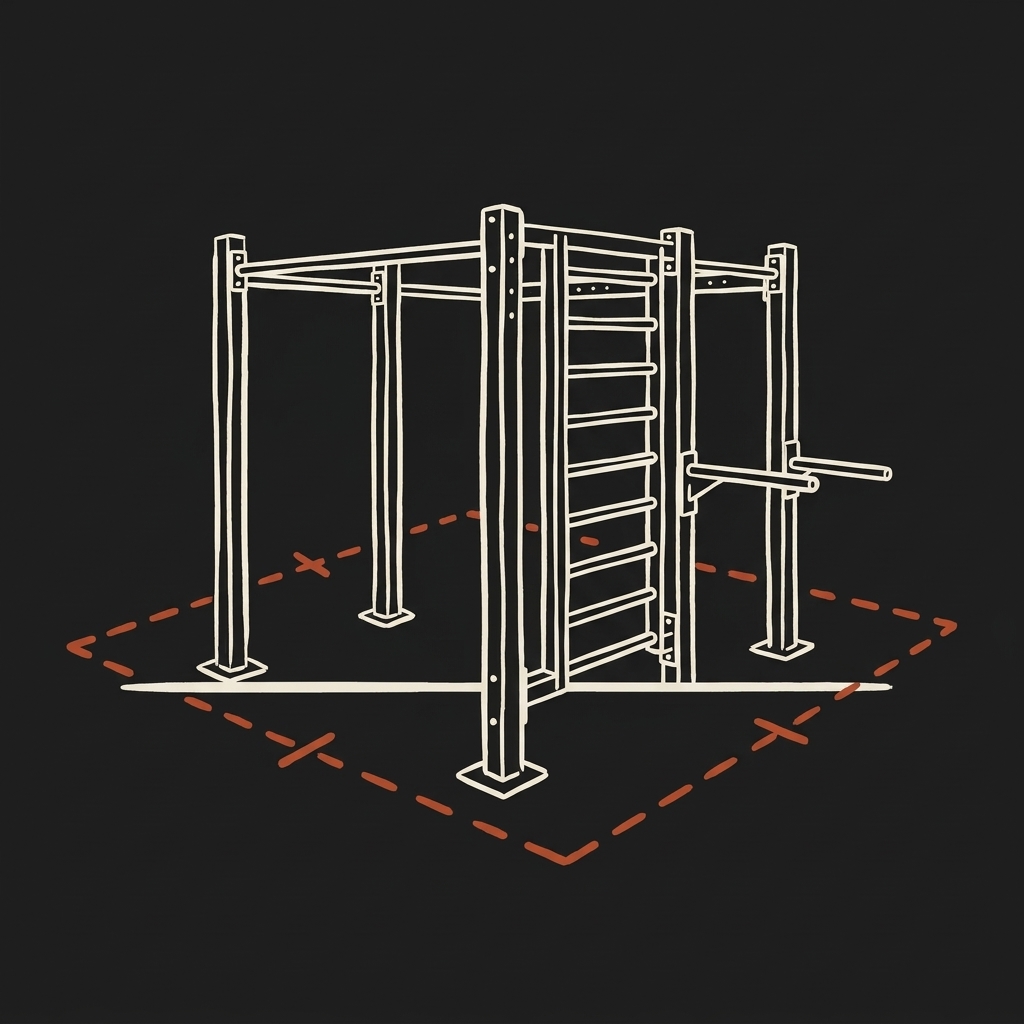
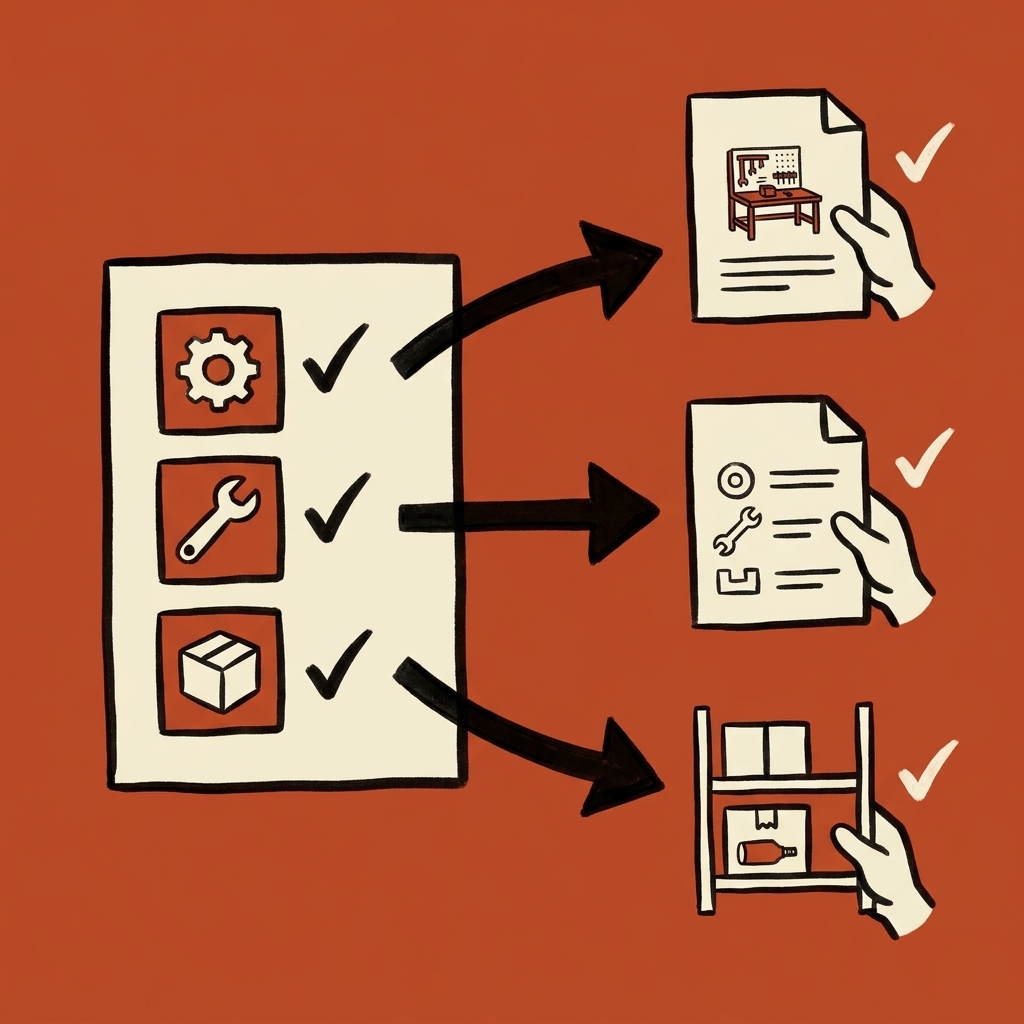
We started with the founder, and then went to the people in charge of each part of the work across different departments: the design office, administration and operations, production and the warehouse. With each of them we went through the work as it is actually done. In the design office, how a request becomes a project: the room rebuilt from the customer's plan, the modules placed, the 2D and 3D renders prepared and the layout sent on. In administration, how that project becomes an offer, then an order, a delivery, an invoice and a payment, and how the bank is checked and reconciled every day. In the warehouse, how the parts list of each job is drawn up, how stock is committed, and how an order to a supplier is put together. Every step was shown to us on screen, on real projects and real offers.
That gave us an estimate of what this manual work costs the company today. Each task was counted in the hours it takes, at the Italian national contract rate for the role of the person doing it, with contributions and severance on top.
From this came fourteen opportunities, each one a change we believe can make a real difference to the way the company works today. Ten more were identified and set aside for now, so that the effort goes first to the ones with the biggest impact.
One rule sits underneath all fourteen: AI extracts and proposes, and a person in charge, with their experience, checks, reviews and approves the final decision. Nothing is recorded, and nothing reaches a customer, without that person's approval.
- The request and the customer. Today a request can arrive as a voice note, a photo, a PDF or a sketch, and the project waits while someone goes back to the customer for a missing measure or plan. With the automation, every request is collected in one sheet, what is missing is asked for once, and the design office starts when the sheet is complete. A sales assistant prepares the first reply in the customer's language and qualifies the lead; the founder closes the sale.
- From project to offer. Today the designer places the modules in the project, administration types the same modules, images and prices into the offer, and the warehouse draws up the parts list from the drawing: the same list, built three times. With the automation, the list of modules is read from the project once, and the offer and the parts list are drafted from it with images, codes and prices already in place. The first 3D draft and the customer's changes are prepared the same way, for the designer to finish.
- Parts list, delivery notes and stock. Today the parts list is drawn up by hand for each job, the stock it needs is not committed in the warehouse program, and the painter's delivery notes are typed in once a week. With the automation, the parts list is proposed from the confirmed project and committed after a check, so the job itself says what is missing; the painter's notes are read from a photo; and stock is visible to whoever sells and designs, without asking.
- Orders and stock. Today reordering starts when someone notices an item running low, and the slowest suppliers deliver four to five months later, containers from China included. With the automation, consumption, commitments and lead times are followed all the time, a warning comes before anything runs out, and the order is prepared with its amount for the founder to approve.
- Administration. Today the bank is checked and written up by hand every day, deliveries and deadlines live in one diary, and the day's list is given by voice each morning. With the automation, bank movements and card expenses arrive matched and ready for the accounting program, deliveries and deadlines sit in one shared calendar with the day's list ready each morning, and the paperwork for export orders is drafted from the confirmed order.
What we found is a company whose craft lives in its people and whose information travels by hand. The same list of modules is written three times for every order. What is in stock is known by the warehouse team and asked for by voice. The bank is checked and written up every day. Every date lives in one diary. The fourteen automations take each of those and put it in one place, read once and shared: a request that arrives complete, an offer and a parts list drafted from the project, stock visible to whoever sells and designs, orders proposed before anything runs out, and an administration that starts the day with the bank already matched.
The Opportunity Assessment is delivered and the AI build has been initiated. This page grows with the work.
Let's talk
Let's find what AI can do for your business.
Every company is different. The best place to start is a chat.